

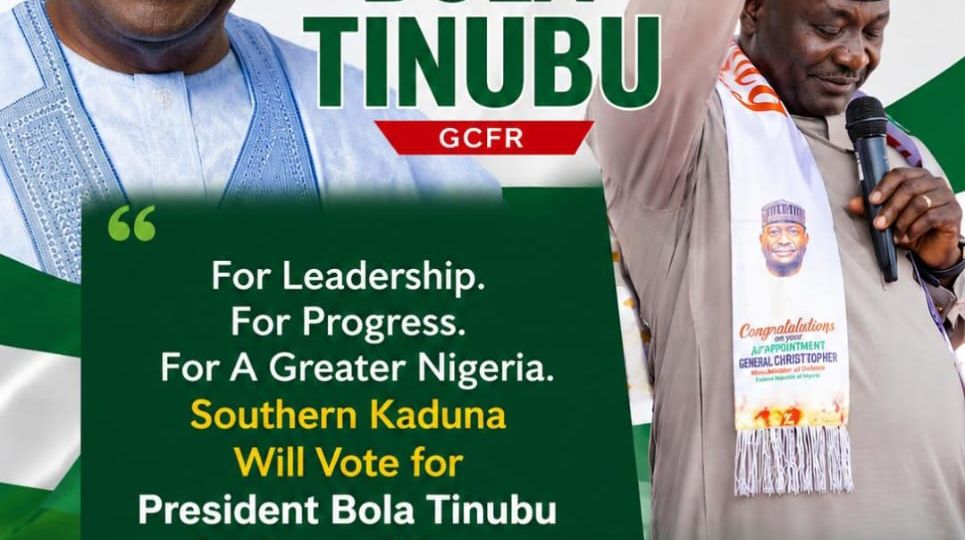
Election 2027: Why President Bola Ahmed Tinubu Is Well Positioned to Win Re-Election
By Victor Mathew Bobai, Public Affairs Analyst
Political commentators often argue that leaders who implement difficult economic reforms rarely survive at the ballot box. Across Africa, Asia, and Latin America, many governments have faced public resistance after removing subsidies, restructuring currencies, or adopting fiscal reforms. However, history also demonstrates that leaders who endure short-term criticism while laying the foundation for long-term prosperity can ultimately earn public trust and secure renewed mandates.
As Nigeria approaches the 2027 presidential election, the question is no longer whether President Bola Ahmed Tinubu’s reforms have been painful. The real question is whether Nigerians will judge him solely by the temporary hardships of reform or by the long-term benefits and transformation his administration is striving to achieve.
A President Willing to Take Difficult Decisions
Upon assuming office on May 29, 2023, President Bola Tinubu inherited an economy burdened by unsustainable fuel subsidies, foreign exchange distortions, rising debt obligations, declining investments, and dwindling government revenues.
Rather than postpone difficult decisions for political convenience, he chose to confront the challenges directly.
The removal of fuel subsidies, the unification of exchange rates, tax reforms, infrastructure investments, expansion of student loan schemes, and efforts to attract foreign investment were not designed to create hardship. They were intended to rescue Nigeria from a cycle of economic dependency and fiscal instability.
Many previous administrations recognized these problems but avoided comprehensive reforms due to political considerations. President Tinubu chose a different path by prioritizing national recovery over personal political comfort.
Nigerians Understand the Difference Between Pain and Progress
While citizens have experienced economic pressures, Nigerians are also aware that many of the structural challenges facing the country did not begin in 2023.
For decades, successive governments relied on subsidy regimes and borrowing while postponing fundamental reforms. President Tinubu inherited these accumulated challenges and accepted the responsibility of addressing them.
By 2027, many voters may evaluate not only the difficulties they endured but also the visible improvements achieved through those sacrifices.
If inflation moderates, infrastructure projects are completed, employment opportunities expand, investments increase, and the naira stabilizes, public perception could shift significantly in favour of the administration.
Infrastructure and Development Projects Will Speak Loudly
Across the country, the administration has embarked on major road construction, railway development, energy sector reforms, housing initiatives, agricultural interventions, and social investment programmes.
Projects such as the Lagos-Calabar Coastal Highway, ongoing road networks, agricultural mechanization programmes, and expanded educational financing through student loans are expected to produce visible results before the next election.
Historically, voters often reward leaders when they can physically see and experience developmental projects in their communities.
National Security Remains a Key Factor
Security remains one of the most important concerns of Nigerians.
The administration has continued to strengthen the armed forces, invest in military equipment, improve intelligence gathering, and intensify operations against terrorism, banditry, kidnapping, and other criminal activities.
If the government sustains progress in restoring peace across affected regions, many citizens may view security improvements as a compelling reason to support continuity in leadership.
The Power of Incumbency and Political Structure
President Tinubu is not only the sitting President; he is also one of Nigeria’s most experienced political strategists.
His political network spans every geopolitical zone, while the ruling APC maintains significant structures across the federation.
The advantage of incumbency, combined with extensive grassroots political organization, gives the President a strong foundation heading into the 2027 elections.
Furthermore, opposition parties continue to face challenges related to internal divisions, leadership disputes, and coalition-building efforts.
Unless the opposition presents a united and compelling alternative, President Tinubu’s political machinery could prove decisive.
Economic Recovery May Change Public Sentiment
Economic reforms often take time before benefits become visible.
Countries that implemented difficult reforms frequently experienced initial public dissatisfaction before eventually recording stronger growth, increased investments, and improved fiscal stability.
Should Nigeria begin to experience sustained economic recovery between 2026 and 2027, many voters may conclude that abandoning the reforms midway would be counterproductive.
In such circumstances, continuity rather than disruption may become the preferred choice of the electorate.
Northern and Southern Political Dynamics
President Tinubu’s administration has continued to make strategic appointments and developmental interventions across the six geopolitical zones.
As political consultations intensify ahead of 2027, support from influential stakeholders, traditional institutions, youth groups, women organizations, religious leaders, and grassroots political actors could significantly strengthen his re-election prospects.
The ability to maintain broad national alliances will remain one of the administration’s greatest strengths.
Lessons from Democratic Politics
Democracy is ultimately about performance, perception, and trust.
Citizens certainly care about present economic realities, but they also consider leadership courage, national stability, infrastructure delivery, security improvements, and future prospects.
Many world leaders have won re-election after implementing difficult reforms because voters eventually recognized the necessity of those decisions.
President Tinubu’s political future may therefore depend not merely on the sacrifices Nigerians have made, but on whether those sacrifices produce measurable improvements before 2027.
Conclusion
The argument that economic reforms automatically lead to electoral defeat oversimplifies political reality.
President Bola Ahmed Tinubu entered office at a time when difficult choices could no longer be avoided. His administration chose reform over postponement and long-term sustainability over short-term popularity.
If economic indicators improve, infrastructure projects are completed, security gains are sustained, and citizens begin to experience tangible benefits from the reforms, President Tinubu could enter the 2027 election not as a weakened incumbent but as a leader seeking a renewed mandate to consolidate the foundations he has laid.
Ultimately, elections are won not only by promises but by performance, resilience, and the confidence voters have in the future. If Nigerians believe the country is moving in the right direction, President Bola Ahmed Tinubu may well secure a convincing victory in 2027.
